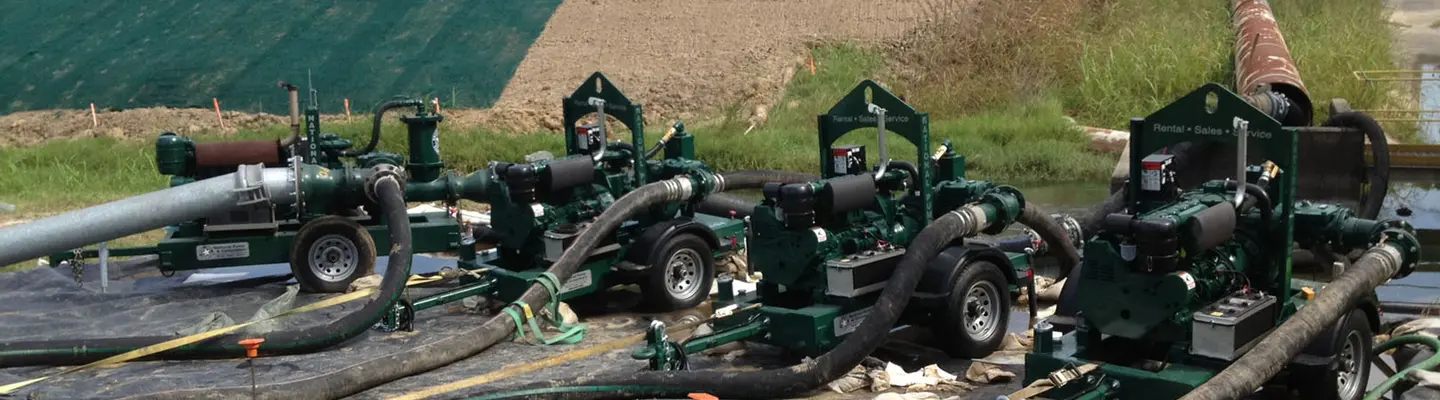
Use TDH to help you determine the right size pump for every pumping operation.
What does pump TDH mean? When you know the answer and how to calculate TDH for a pump, you can master pump sizing for your site dewatering, bypass pumping or other fluid handling project to help ensure an effective, fuel-efficient operation, one that delivers the required flow rate while minimizing the risk of failure.
What is TDH in pumps?
Total dynamic head (TDH) is the total resistance a pump has to overcome to move fluid through a pumping system, expressed in feet or meters.
For example, a dewatering project may require pumping water from a 20-foot excavation through 600 feet of discharge hose into a nearby storm sewer. Vertical lift is only part of the challenge. The hose length, fittings and discharge conditions all add resistance that the pump must overcome. Total dynamic head combines those factors into a single value to help you identify the right pump for the application.
Why TDH matters for pump selection
Using whatever pump you have on hand that looks like a match for the job on a pump curve chart may be tempting, but getting pump sizing right with the help of TDH calculation can save you time and money in the end. Knowing the TDH at the planned flow rates helps you:
- Optimize pump operation and fuel costs. A pump of the right size operates close to its best efficiency point (BEP). If the pump is too small, the system is likely to underperform or fail. If it’s too large, you’ll overspend on fuel or electricity.
- Avoid downtime. Pump failure, often caused by a mis-sized pump, can cause significant project delays. In some cases, it can trigger fines for overflows or permit violations.
- Protect the pump. Chronic overload can lead to cavitation and destroy seals, impellers and motors, causing the pump to wear out faster.
- Size pipes and hoses right. TDH influences not only the optimal pump size but also the optimal pipe diameter or hose size. Right-sizing these components helps you avoid surprise friction losses.
The four components of TDH pump calculations
Three and sometimes four types of head are used to calculate TDH.
Static head (vertical lift)
Static head is the vertical lift between the source and the discharge. It’s calculated by measuring the difference in height between the lowest liquid level on the suction side and the elevation of the discharge point or receiving tank. Static head can be significant in projects that involve dewatering pits and lift stations, for example.
Friction head (resistance from friction)
Friction head is the loss of energy from friction a liquid will encounter as it flows through pipes, hoses, valves and fittings. This number increases with:
- Higher flow rates
- Smaller diameter pipes
- Longer runs
- Pipes with rough interiors, such as concrete and cast iron pipes
- Each bend and valve (a single check valve can add 15+ feet of head)
The total dynamic head formula below explains how to calculate friction head loss.
Friction losses can easily double your effective TDH. On large discharge runs or force mains, friction head may be as large as or larger than static head.
Velocity head (speed of liquid movement)
Velocity head reflects the speed of liquid moving through the pipe. It’s important to include it in the TDH calculation if the suction pipe diameter differs from the discharge pipe diameter or if velocities exceed 8 feet per second.
Learn how to calculate velocity head in the total dynamic head formula below.
Pressure head (where applicable)
Pressure head in pumps is the pressure difference between the suction side and the discharge side of a pumping system. In practical terms, it’s the head needed to meet a required outlet pressure, which is a big factor when discharging fluid into a system under pressure, such as force mains and process lines, instead of into open air.
Pressure head is expressed as the height of a liquid column that represents the internal energy or pressure of a fluid.
How to calculate TDH for a pump: The total dynamic head formula
The basic TDH formula is simple:
TDH = static head + friction losses + pressure head.
Use it to determine your system’s TDH when pumping water under standard conditions. For other pumping scenarios, it helps to work with an experienced pump provider to determine TDH and design a pump system.
Here’s a quick look at how to use the TDH formula.
- Measure static head (the vertical rise from source to discharge).
- Determine friction head
- Measure the total pipe/hose run length.
- Identify all fittings and convert to equivalent pipe length.
- Calculate friction loss by referring to a friction head loss chart, pump sizing software or manufacturer data using your system’s flow rate, pipe size and length as inputs.
- Calculate velocity head using V²/2g (the square of the fluid velocity divided by twice the acceleration due to gravity).
- Calculate pressure head, if needed, by converting required discharge pressure in psi to feet of head using psi x 2.31.
- Add static head, friction head, velocity head and pressure head.
- The total is your TDH.
Once you know your TDH and required flow rate in gallons per minute (gpm), plot those values on a pump performance curve to identify the pump that can deliver that flow at that head.
Other pump selection factors to consider
TDH is only one factor in choosing the right pump. Keep in mind other factors that can impact your pump selection and system performance. One is the required flow rate, which dictates where on the pump curve a pump must run. Another is the density or specific gravity of the fluid. Denser fluids produce higher pressure, so the same pump head yields different psi values with different liquids. Elevation is another factor. In thinner atmospheres, you’re likely to need a more powerful pump.
In addition to calculating TDH, you need to calculate the net positive suction head (NPSH). While TDH helps ensure the pump can move the fluid through the system, NPSH helps ensure the pump can draw the fluid into the impeller without cavitation or damage.
The value of a turnkey pumping partner with in-house engineers
Choosing the right pump for an application can be harder than it seems. Even with a solid TDH calculation and a good handle on the pump size you need, real‑world conditions can throw you a curve. Maybe you discover your system exceeds the suction lift limits of standard centrifugal pumps, or your line losses turn out higher than expected once hose runs and fittings are finalized.
A custom pump system design from an experienced pump provider can help you avoid issues like these and the downtime and disruption they can cause.
United Rentals’ in-house engineering team designs complete pumping systems based on an analysis of site data to help you get your pumping job done safely and efficiently. United Rentals also offers turnkey pumping services that include installation, operation, remote monitoring and removal, as well as a comprehensive pump fleet that includes high‑head pumps, double diaphragm pumps and wellpoint pumps.
With United Rentals as your pumping partner, you can worry less about calculating TDH to choose the right pump and focus more on completing the work that comes after pumping.
 Facebook
 X
 Linkedin
 Email
 Print
 Copy Link
 RSS Feed
