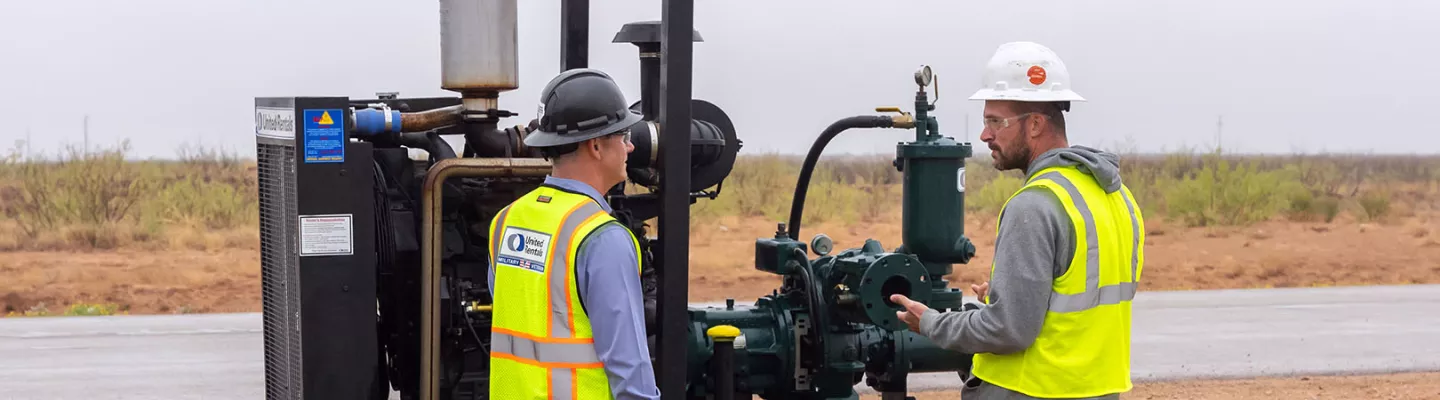
Advanced planning can prevent costly disruptions when an aging fire suppression pump fails.
Article Updated on: July 24, 2026
Aging fire suppression systems pose a real financial and safety risk for fixed facilities such as manufacturing plants, food processing facilities and refineries. If a fire suppression pump fails, facility managers may need to shut the site down to remain in code compliance, avoid liability and protect workers. Most plant maintenance, environmental and safety managers do not have a plan in place for a temporary fire suppression system to replace the permanent one during maintenance or repairs. Without a plan, an emergency can cost precious hours or even days of downtime.
Partnering with a temporary pump solutions vendor to design a temporary fire suppression system plan before it is needed protects both profits and people.
The case for front-end planning
Some plants and refineries in use today are 40, 50 or 60 years old, and so are the pumps that supply the water for their fire suppression systems. Many of these pumps haven’t been properly maintained in decades and carry a high risk for mechanical failure.
Pump failures often lead to middle-of-the-night calls to a rental provider for a temporary fire suppression pump. But solving the problem isn’t always as simple as ordering a piece of equipment.
No two fire suppression systems are the same. Flow and pressure requirements and pump data are needed to select the right high-efficiency temporary centrifugal pump, and in older facilities this documentation is often lost or hard to find. When a system failure occurs, engineers may have to manually inspect the data plate of each pump and do additional detective work to determine incoming pressure, total system pressure requirements and flow demand.
A better solution: Have a fire pump rental provider visit the facility and create a plan for different pump failures or other fire suppression service disruptions, so operations face minimal disruption when a failure happens. The provider will observe and document incoming pressure, total system demand, suction and discharge connection diameters and types, and pump and motor data plates. With that information in hand, the provider can select the power, size and type of pump, plus the high-pressure hoses a temporary system will require.
What is a temporary fire suppression system?
A temporary fire suppression system replaces a facility's permanent fire suppression pump during maintenance, repairs or unexpected failure. It uses portable pumps, hoses and accessories sized to your facility's specific flow and pressure requirements, so operations continue without gaps in fire protection coverage.
Temporary fire suppression system applications
Temporary firewater pumps come in handy at multiple points in the life of a facility.
Sudden pump failure
If a catastrophic failure occurs, a facility’s fire suppression pump may have to be shipped back to the manufacturer to be refurbished, or a new pump may have to be ordered. In today’s supply chain environment, a new pump could take as long as six months to a year to arrive. A temporary fire suppression system can take over in the meantime to allow the facility to continue operating.
Pump maintenance
Performing regular preventive maintenance on facility pumps can help them last longer, which delays the need for new pumps, saving plants money. Temporary fire pumps allow facilities to take permanently installed pumps offline for maintenance and if needed, repairs.
Facility expansion
Additions to a facility usually require an upgrade to the fire suppression system to handle the extra load. But long lead times for new pumps can potentially delay the construction schedule. Having a plan for a temporary fire suppression system can rescue the project timeline in the event the permanent pump can’t be delivered and installed in time for system testing or operational need.
Considerations
Deciding when and how to bring in a temporary fire suppression pump depends on a handful of factors specific to your facility, including the following:
Consideration | What Facility Managers Need to Know |
|---|---|
When to use a rental solution | Sudden fire suppression pump failure, planned preventive maintenance, or facility expansion that increases fire suppression system demand |
Sizing / spec considerations | Incoming pressure, total system demand, suction and discharge connection diameters and types, pump and motor data plate specs |
Deployment timeline | Emergency deployment can happen within hours when a plan and documentation exist beforehand; undocumented systems require on-site engineering review first, adding time |
Cost drivers | Pump size and power, rental duration, accessories such as pressure transducers, variable frequency drives and automatic cellular dialers, and emergency versus planned deployment |
Maintenance / support | United Rentals Fluid Solutions provides a complimentary planning visit plus in-house engineering support for system integration |
Alternatives | Shipping the failed pump back to the manufacturer for refurbishment or ordering a new pump — both options can take 6 months to a year given today's supply chain |
Choosing a planning partner
Not all fire pump rental vendors offer planning for temporary fire suppression systems. Few are turnkey solutions providers with the in-house engineering expertise to create a design that integrates with the permanent system and delivers the performance your facility needs. United Rentals Fluid Solutions, recognizing the importance of this planning, provides this service as a complimentary visit.
With the largest inventory of diesel centrifugal pumps in the U.S., United Rentals Fluid Solutions can supply the right fire suppression pump for your project. Facilities can choose electric pumps to meet their company's sustainability initiatives, and UL/NFPA rated pumps are available if required. United Rentals offers pumps for rent or sale, and we can install system accessories such as pressure transducers, variable frequency drivers and automatic cellular dialers on pumps.
For facilities managing a broader disruption, our emergency response and facility shutdown support teams coordinate directly with Fluid Solutions to keep operations protected from every angle.
 Facebook
 X
 Linkedin
 Email
 Print
 Copy Link
 RSS Feed
