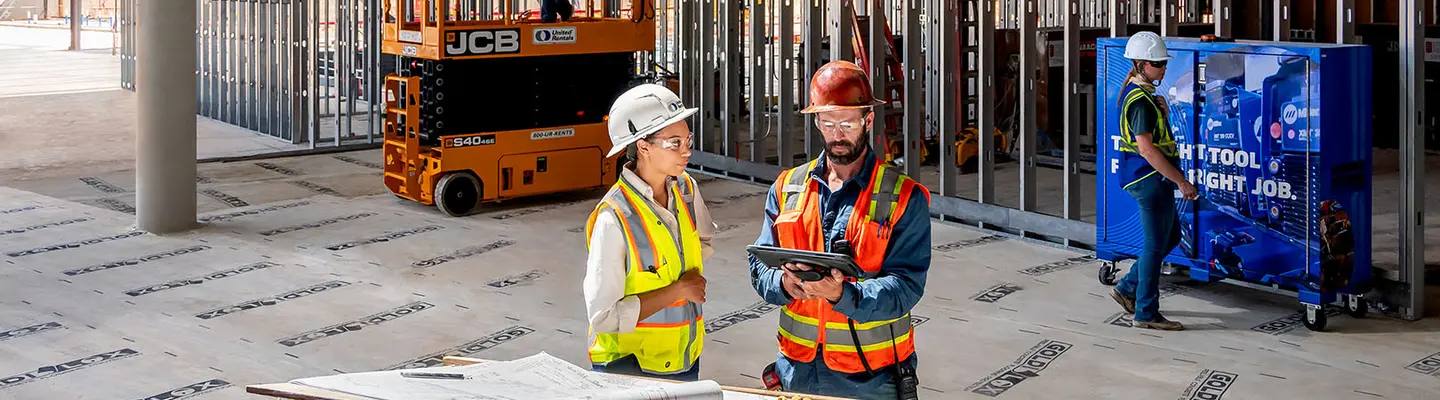
Software integrations deliver increased visibility and control across projects.
As construction technology stacks expand, contractors are running into a new kind of inefficiency: data silos in their systems. When fleet data lives in a fleet management platform, project data lives in construction management software and maintenance data lives in a maintenance platform, the result is manual data entry and fragmented visibility. Decentralized data creates missed opportunities to improve jobsite performance and optimize budgets.
Open fleet management platforms are beginning to address this challenge by making fleet data usable across the broader construction tech stack and connecting the systems teams rely on every day.
The value of automated fleet data sharing
Traditional fleet management platforms operate as closed environments. Telematics data such as real-time equipment location, utilization and engine hours stays within the platform. To use the data in other systems, teams must manually export, re-enter or reconcile it.
Open platforms aim to bridge this resource gap so equipment data moves automatically between systems. This approach can allow contractors to more easily:
- See what equipment is in the field, how it’s being used and what it’s costing in real time
- Map equipment usage to specific projects and cost codes
- Ensure that project stakeholders in project management, operations and finance are working from the same information
- Keep equipment records consistent and up to date across systems without duplicate entry or reconciliation
With system integrations, project managers can look at equipment data in context. They can see how machines are being used on jobs and how much they are contributing to productivity and profitability.
Total Control® integration with Procore
United Rentals’ Total Control® platform was built with flexibility in mind. A recent integration with Procore Technologies is a first step in helping contractors bring equipment data into the tools they use to manage projects and operations, in this case Procore’s Resource Management solution.
Through application programming interfaces (APIs), Total Control can continuously and securely send equipment telematics and rental data to Procore in near real time. This capability gives Procore customers a complete view into the location and utilization of owned and rented equipment, and the rental status of rented equipment, from a single pane of glass. Seeing all their equipment across jobsites, and whether it’s being used or sitting idle, helps them make informed decisions about what assets they need—or don’t need—to rent or purchase to make sure they have the right equipment for a particular job.
RELATED: United Rentals’ Equipment Agent Helps Customers Find the Right Equipment Fast
Enabling smarter maintenance workflows
Maintenance is another area where siloed systems create friction. By connecting their fleet management platform with their fleet maintenance software, contractors can:
- Leverage engine hours or run times to automatically create maintenance schedules based on actual usage
- Use engine diagnostics and fault codes to improve maintenance and repair decisions
- Keep consistent service records
Optimizing maintenance and repairs helps right-size service budgets, reduce equipment-related downtime and extend equipment life. Automating maintenance scheduling and recordkeeping minimizes administrative effort.
Future-proofing a construction tech stack
Technology is evolving fast, and many contractors are adding new construction software tools as business needs change and novel solutions come to market. With closed systems, each new tool creates another data silo, forcing teams to chase the data they need and locking contractors into that system. Open fleet management platforms offer the flexibility to build a connected ecosystem that can adapt and scale over time.
Having access to equipment data where and when it’s most useful streamlines workflows and lets contractors put that data to best use across the business. Clearer visibility into equipment utilization, diagnostics and costs supports data-driven fleet decisions, more efficient operations and more productive jobsites.
When open platforms reduce manual processes, enhance control and improve performance, they become not just a convenience but a competitive edge.
 Facebook
 X
 Linkedin
 Email
 Print
 Copy Link
 RSS Feed